
PTSD Service Dog vs. Therapy Dog: What’s the Difference?
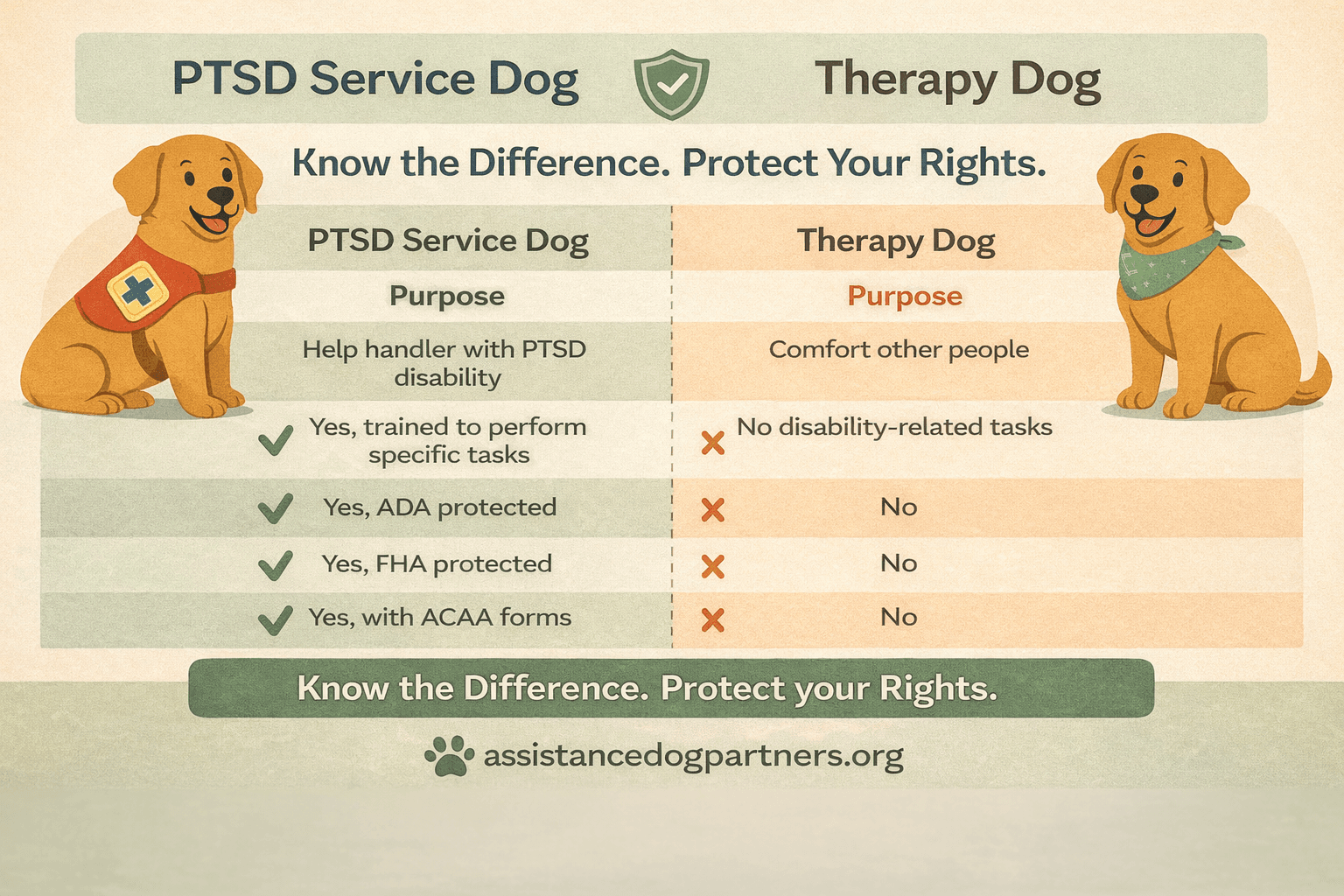
People living with PTSD often find tremendous comfort and stability through animals. However, one of the most common—and costly—sources of confusion is the difference between a PTSD service dog and a therapy dog. While both can provide emotional benefits, they are not the same, and misunderstanding the distinction can lead to denied access, legal trouble, or unmet support needs.
This guide explains the differences clearly, so you can make an informed, lawful, and empowering decision.
Understanding PTSD and Animal-Assisted Support
PTSD affects how the brain processes safety, memory, and threat. Many people experience panic attacks, hypervigilance, dissociation, nightmares, or difficulty functioning in public spaces. Animals can help regulate the nervous system—but how they help matters.
Animal-assisted support exists on a spectrum:
- Some animals provide emotional comfort
- Others are task-trained medical aids
Where a dog falls on that spectrum determines its legal rights and practical role.
What Is a PTSD Service Dog?
A PTSD service dog is a psychiatric service dog that has been individually trained to perform specific tasks that directly mitigate a person’s PTSD-related disability.
Tasks PTSD Service Dogs Are Trained to Perform
Common tasks include:
- Interrupting panic attacks or dissociation
- Waking the handler from nightmares or night terrors
- Providing deep pressure therapy (DPT)
- Creating space in crowds or guiding the handler out of overwhelming environments
- Alerting to escalating anxiety
- Supporting routines or medication reminders
These tasks are not optional or symbolic—they are what legally qualify the dog as a service animal.
Legal Status of PTSD Service Dogs
Under U.S. federal law:
- PTSD qualifies as a disability
- Psychiatric service dogs have the same rights as guide dogs or mobility service dogs
A PTSD service dog is protected under:
- Americans with Disabilities Act (ADA) – public access
- Fair Housing Act (FHA) – housing accommodations
- Air Carrier Access Act (ACAA) – air travel (with required forms)
What Is a Therapy Dog?
A therapy dog is trained to provide comfort and affection to other people, not to mitigate its handler’s disability.
Role of Therapy Dogs
Therapy dogs typically:
- Visit hospitals, schools, nursing homes, or disaster areas
- Work alongside volunteers or professionals
- Provide emotional support to groups or individuals
They are wonderful animals—but they are not disability aids.
Legal Status of Therapy Dogs
Therapy dogs:
- Do not have public access rights under the ADA
- Are only allowed in places where they are specifically invited
- Are covered by program or organization rules, not disability law
A therapy dog cannot accompany someone into stores, restaurants, housing, or flights based on disability rights.
Training Requirements Compared
PTSD Service Dog Training
Service dogs must:
- Be trained to perform specific PTSD-related tasks
- Meet high standards of public behavior
- Remain under handler control at all times
Training may be done:
- Through professional programs
- Through owner-training with structured guidance
Therapy Dog Training
Therapy dogs focus on:
- Calm temperament
- Obedience and sociability
- Comfort around strangers
They are often certified through therapy dog organizations—but this certification does not grant legal access rights.
Certification, Registration, and Documentation
A crucial clarification:
❌ There is no government-issued certification for service dogs in the U.S.
However:
- Housing providers may request disability-related documentation
- Airlines may require DOT forms
- Identification cards and vests are optional tools, not legal proof
Ethical organizations educate handlers on lawful use—rather than selling false “licenses.”
Which Is Right for Someone With PTSD?
A PTSD Service Dog May Be Right If:
- PTSD symptoms interfere with daily functioning
- You need trained tasks, not just comfort
- You rely on the dog in public settings
- You need legal protection for access and housing
A Therapy Dog May Be Right If:
- You want emotional comfort without public access
- You plan to volunteer or visit facilities
- You already receive sufficient clinical support
Some people benefit from both, but they serve very different roles.
Common Myths and Misconceptions
- “Therapy dogs have the same rights as service dogs” → ❌ False
- “Any calm dog can be a PTSD service dog” → ❌ False
- “You must buy an expensive trained dog” → ❌ False
- “Registration equals legality” → ❌ False
These myths cause real harm—especially to PTSD handlers who rely on their dogs for safety.
Legal Consequences of Misrepresentation
Falsely claiming a pet or therapy dog as a service dog can result in:
- Fines or misdemeanor charges (depending on state law)
- Removal from businesses or housing
- Increased scrutiny of legitimate service dog handlers
Protecting service dog access starts with accurate representation.
How Assistance Dog Partners Can Help
At AssistanceDogPartners.org, we support handlers through:
- Education on service dog laws and rights
- Ethical service dog identification tools
- PTSD service dog training resources
- Guidance for owner-trained psychiatric service dogs
Our mission is to protect access—not exploit confusion.
Frequently Asked Questions
Can a therapy dog become a PTSD service dog?
Yes—if the dog is trained to perform disability-mitigating tasks and meets public access standards.
Are psychiatric service dogs legally equal to guide dogs?
Yes. The ADA does not distinguish by disability type.
Can a business ask about my PTSD?
No. They may only ask:
- Is the dog required due to a disability?
- What tasks is the dog trained to perform?
Conclusion
The difference between a PTSD service dog and a therapy dog isn’t about value—it’s about function, training, and legal protection. Understanding this distinction ensures you receive the support you truly need—without risking your rights.
Choosing the right support is a powerful step toward stability and recovery.