
PTSD Therapy Explained: Treatment Options That Really Help
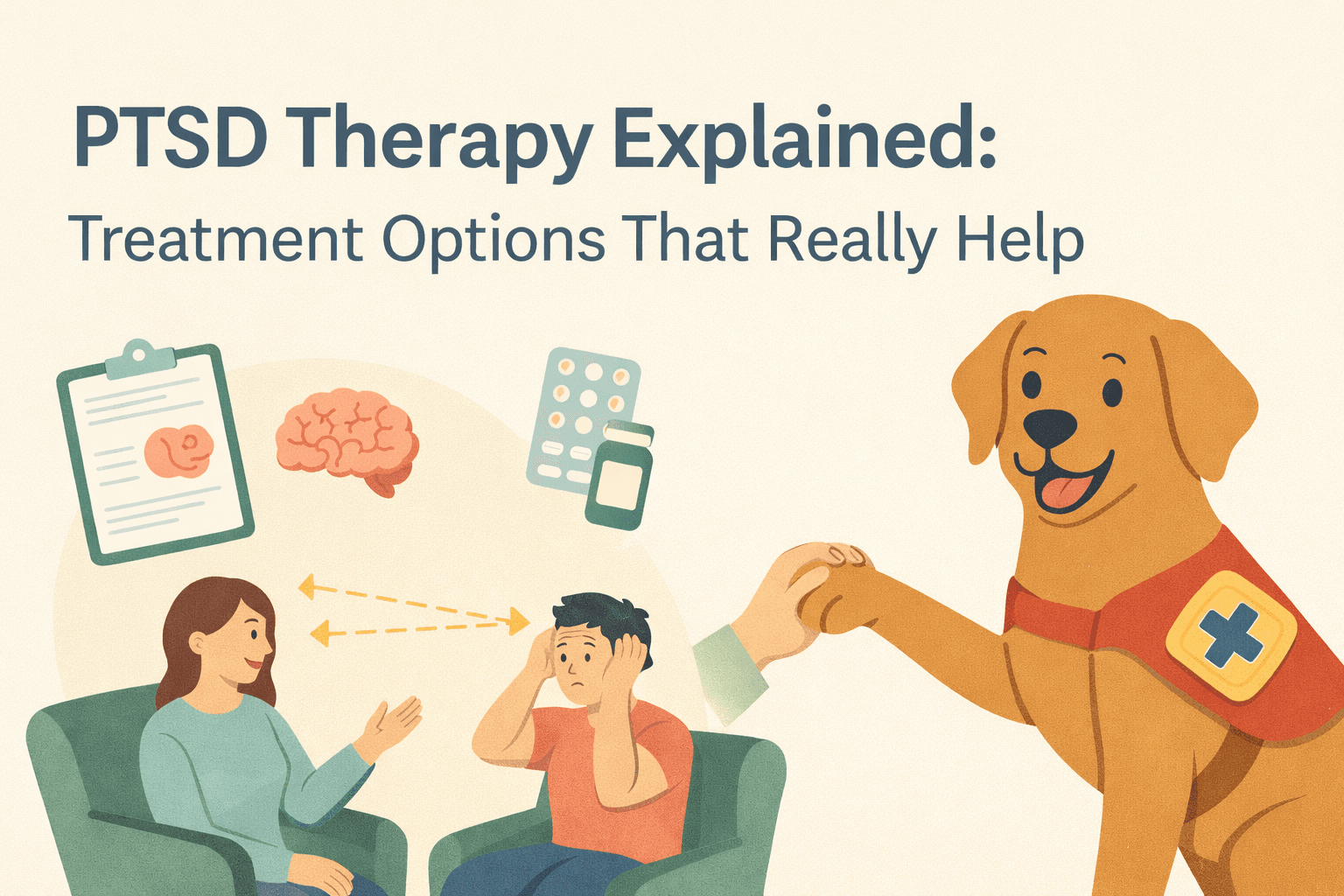
Post-Traumatic Stress Disorder (PTSD) is a complex mental health condition that affects how the brain, body, and nervous system respond to perceived danger. While the symptoms can feel overwhelming and isolating, PTSD is highly treatable. With the right combination of therapy, support, and tools, many people experience real and lasting improvement.
This article explains what PTSD therapy actually involves, how different treatment options work, and how supportive interventions—such as PTSD therapy dogs—can meaningfully complement professional care.
What Is PTSD?
PTSD can develop after exposure to a traumatic event such as combat, sexual or domestic violence, serious accidents, childhood abuse, medical trauma, or natural disasters. Importantly, trauma is subjective—what overwhelms one person’s nervous system may not overwhelm another’s.
Core PTSD Symptom Clusters
PTSD symptoms are commonly grouped into four categories:
- Re-experiencing symptoms
These include flashbacks, intrusive memories, and nightmares. The brain reacts as if the trauma is happening again, even when the person is physically safe. This is not imagination—it’s the brain’s threat system misfiring.
- Avoidance behaviors
Many people avoid reminders of the trauma, including certain places, people, conversations, or even thoughts. While avoidance can feel protective in the short term, it often reinforces fear and keeps PTSD symptoms active.
- Negative changes in mood and beliefs
Trauma can alter how someone sees themselves and the world. Persistent guilt, shame, emotional numbness, hopelessness, or feeling disconnected from others are common and deeply distressing.
- Hyperarousal and reactivity
This includes being constantly “on edge,” difficulty sleeping, irritability, exaggerated startle response, and trouble concentrating. The nervous system remains stuck in survival mode.
When these symptoms last longer than a month and interfere with daily life, PTSD therapy is strongly recommended.
How PTSD Therapy Helps
PTSD therapy works by helping the brain and nervous system relearn safety. Trauma locks the body into a constant state of alert, even when danger has passed. Therapy gradually teaches the brain that the present moment is different from the past.
Effective therapy focuses on:
- Reducing the intensity and frequency of symptoms
- Improving emotional regulation and sleep
- Processing traumatic memories in a safe, structured way
- Building coping strategies for triggers and stress
Crucially, trauma therapy is paced and collaborative. You are not forced to talk about everything at once, and a trained therapist should prioritize stabilization before deep processing.
Evidence-Based PTSD Therapies
Cognitive Behavioral Therapy (CBT)
CBT is one of the most widely used therapies for PTSD. It focuses on how thoughts, emotions, and behaviors influence one another.
In PTSD, the brain often forms beliefs such as “I’m not safe anywhere” or “The trauma was my fault.” CBT helps identify these thoughts, examine whether they are accurate or helpful, and replace them with more balanced perspectives. Over time, this reduces emotional distress and avoidance behaviors.
CBT is structured and practical, which many people find grounding—especially when symptoms feel chaotic.
Cognitive Processing Therapy (CPT)
CPT is a trauma-specific form of CBT that focuses on beliefs formed because of trauma, often called “stuck points.”
These stuck points usually relate to:
- Safety
- Trust
- Control
- Self-worth
- Intimacy
CPT helps individuals examine these beliefs and understand how trauma shaped them. By processing the trauma narrative and challenging self-blame and shame, people often experience significant emotional relief. CPT is commonly used for veterans and survivors of assault and abuse.
Prolonged Exposure Therapy (PE)
Prolonged Exposure therapy is based on the idea that avoidance keeps PTSD alive. By gradually and safely facing trauma-related memories and situations, the brain learns that these reminders are no longer dangerous.
This therapy includes:
- Imaginal exposure, where the trauma memory is revisited in a controlled therapeutic setting
- In-vivo exposure, where safe but avoided situations are approached slowly over time
While PE can sound intimidating, it is carefully structured. Therapists monitor distress levels closely, ensuring the process remains safe and tolerable.
EMDR (Eye Movement Desensitization and Reprocessing)
EMDR helps the brain reprocess traumatic memories so they become less emotionally overwhelming.
During EMDR, the client focuses on a traumatic memory while engaging in bilateral stimulation (such as guided eye movements). This appears to help the brain “unstick” the memory and integrate it more adaptively.
Many people choose EMDR because it:
- Requires less verbal detail
- Can feel less emotionally intense
- Works well for both single-event and complex trauma
Somatic and Body-Based Therapies
Trauma is stored not only in thoughts, but also in the body. Somatic therapies focus on regulating the nervous system directly.
These approaches help individuals:
- Notice physical sensations linked to stress or fear
- Learn how to release tension safely
- Build tolerance for emotional and bodily sensations
Somatic therapies are especially helpful for people who feel disconnected from their bodies or overwhelmed by talk-based therapy alone.
Medication as Part of PTSD Treatment
Medication can help reduce symptom intensity, making therapy more manageable. It is most effective when combined with psychotherapy.
Medications may:
- Reduce anxiety and depressive symptoms
- Improve sleep and reduce nightmares
- Lower overall nervous system hyperarousal
Medication does not resolve trauma on its own, but it can provide stability during the healing process. Decisions about medication should always be made with a qualified medical provider.
Group Therapy and Peer Support
Group therapy offers a powerful antidote to isolation. Hearing others describe similar struggles can reduce shame and self-blame.
In group settings, individuals often:
- Feel validated and understood
- Learn coping strategies from peers
- Practice emotional expression in a safe environment
Groups may be trauma-specific or peer-led and can be especially beneficial alongside individual therapy.
PTSD Therapy Dogs and Animal-Assisted Support
For many people, PTSD therapy dogs or psychiatric service dogs provide constant, nonjudgmental support that complements clinical treatment.
How PTSD Therapy Dogs Help
These dogs are trained to:
- Interrupt nightmares or panic attacks
- Provide deep pressure therapy during distress
- Ground handlers during flashbacks
- Create physical space in public environments
- Encourage routine and emotional regulation
By calming the nervous system, therapy dogs often make it easier for individuals to engage in therapy and daily activities.
Therapy Dogs vs Psychiatric Service Dogs
- Therapy dogs provide comfort but do not have legal public access rights
- Psychiatric service dogs are task-trained to mitigate a disability and may have legal protections under the ADA
These dogs are not replacements for therapy—but they can be life-changing adjuncts.
Online and Telehealth PTSD Therapy
Teletherapy has expanded access to trauma-informed care, especially for individuals in rural areas or those with mobility or anxiety-related barriers.
While online therapy offers flexibility and privacy, it may not be suitable for acute crises. Choosing licensed, trauma-trained professionals is essential.
Choosing the Right PTSD Therapy
No single therapy works for everyone. The best approach depends on:
- Trauma history
- Symptom severity
- Personal preferences
- Readiness for certain techniques
It is completely acceptable—and often necessary—to try more than one approach.
What PTSD Therapy Really Feels Like
Healing is rarely linear. Therapy may bring up difficult emotions, but it should never feel unsafe or overwhelming without support.
Signs therapy is helping include:
- Fewer or less intense symptoms
- Improved emotional awareness
- Better sleep and daily functioning
- Increased sense of control
Progress often appears gradually, not all at once.
Self-Help Strategies That Support Therapy
Self-care practices help reinforce therapy by stabilizing the nervous system.
Helpful strategies include:
- Grounding exercises
- Consistent routines
- Gentle movement
- Journaling
- Limiting substance use
These tools are supports—not replacements—for professional care.
When Therapy Hasn’t Helped Before
If therapy hasn’t worked in the past, it does not mean recovery is impossible. Many factors affect treatment outcomes, including timing, therapist fit, and modality.
Trying a different approach or provider can make a meaningful difference.
Final Thoughts: Healing Is Possible
PTSD therapy is not about erasing trauma—it’s about reclaiming your life. With the right support, people can experience relief, resilience, and renewed connection.
You deserve care that honors your experience and supports your healing at your own pace.