What Is an Autism Assistance Dog?
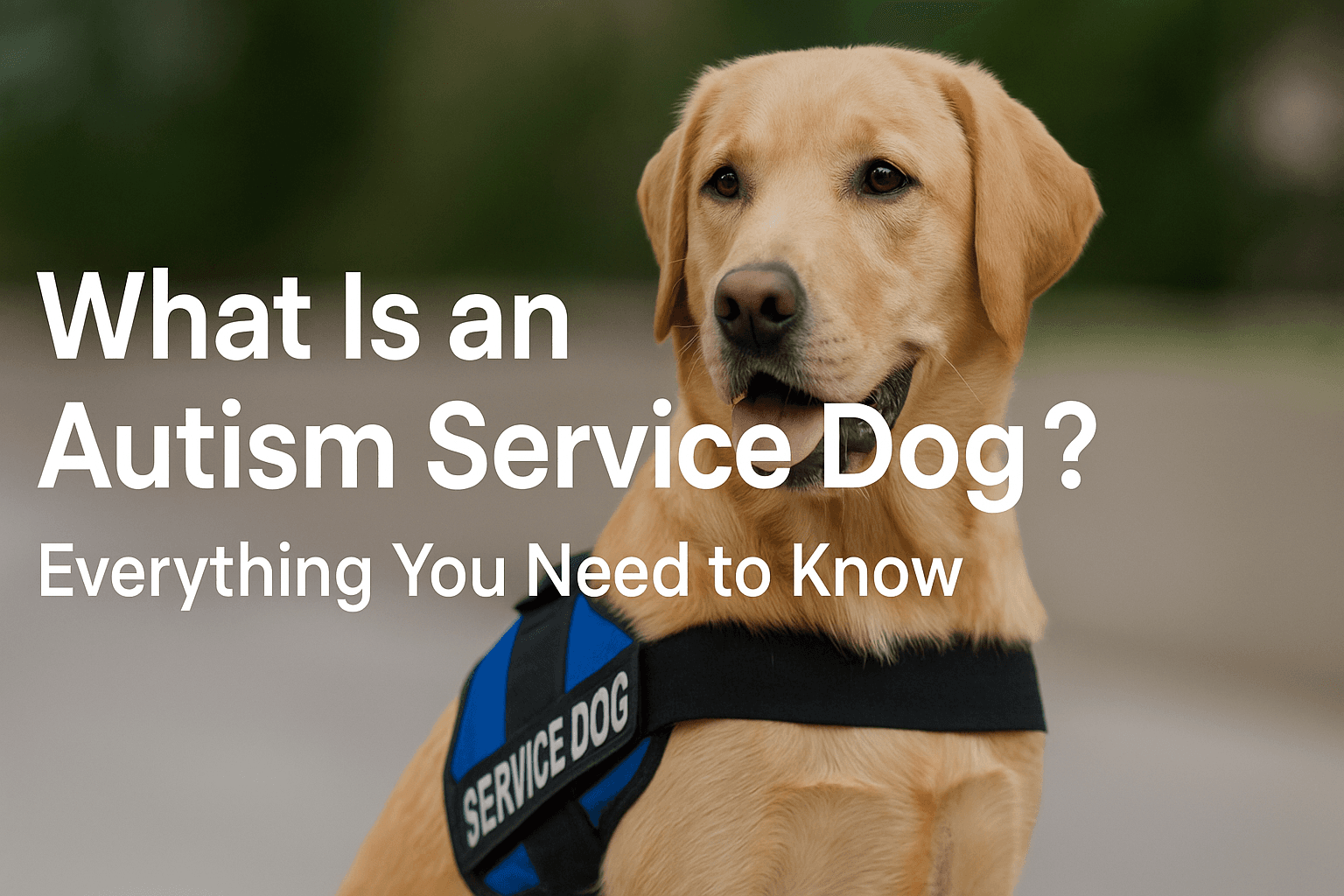
Autism spectrum disorder (ASD) affects how a person thinks, communicates, and interacts with the world. For many individuals with autism—both children and adults—service dogs can offer life-changing support. But what exactly is an autism service dog? How are they different from therapy animals or emotional support dogs? In this article, we’ll explain what an autism service dog is, the roles they play, and how they are legally recognized.
Definition: What Is an Autism Assistance Dog?
An autism assistance dog is a type of task-trained service animal that assists individuals diagnosed with autism spectrum disorder. These dogs are specially trained to perform specific tasks that mitigate the challenges associated with autism.
Under the Americans with Disabilities Act (ADA), a service dog must be trained to perform tasks directly related to a person’s disability. Autism qualifies as a disability under the ADA when it substantially limits one or more major life activities.
Tasks Autism Assistance Dogs Are Trained to Perform
Autism assistance dogs are not pets—they are highly skilled working animals. Their primary purpose is to perform trained, task-specific behaviors that directly assist their handler with challenges related to autism spectrum disorder. While their presence may offer emotional comfort, it’s their trained actions that distinguish them from emotional support animals or companion pets.
Below is an expanded list of the most common and impactful tasks autism service dogs can be trained to perform:
1. Sensory Regulation and Deep Pressure Therapy (DPT)
Autistic individuals often experience sensory processing difficulties, which can lead to meltdowns, anxiety, or shutdowns. Autism assistance dogs are trained to recognize signs of sensory overload and apply deep pressure by lying across the handler’s lap, leaning against them, or gently pressing their body weight. This grounding technique helps regulate the nervous system and brings the individual back to a calmer state.
2. Tracking and Safety Response (Anti-Bolting Support)
Wandering or bolting is a common safety concern, particularly for children with autism. Service dogs are trained to act as physical anchors using a tether system to prevent a child from running into unsafe areas such as roads or bodies of water. In cases where a child goes missing, the dog can be trained in scent tracking to help locate them.
3. Social Cue Assistance
Many individuals with autism struggle with interpreting or responding to social cues. Autism assistance dogs can be trained to give physical nudges or perform subtle alerts to signal when it’s appropriate to respond, stop talking, or end a conversation. These cues can help bridge the gap in social communication and improve interactions with others.
4. Behavioral Interruption of Stimming or Self-Injury
Some forms of repetitive or self-stimulatory behavior can become disruptive or even harmful. Autism assistance dogs are trained to gently interrupt these behaviors by nudging, pawing, or placing their head or body on the individual. For example, if the handler begins to hit themselves or engage in hair-pulling, the dog may interrupt the behavior and redirect attention.
5. Creating a Personal Space Buffer
Crowded or noisy environments can be overwhelming for individuals on the spectrum. A trained service dog can act as a physical barrier by positioning themselves between the handler and others—this is especially helpful in public places like airports or shopping malls. This “buffer zone” reduces sensory input and makes public outings more manageable.
6. Nighttime Assistance and Comfort
Sleep disturbances are common in those with autism. Service dogs can be trained to recognize signs of distress during sleep, such as night terrors or restlessness. They may wake the individual, turn on lights, or provide comforting pressure by lying close. This promotes better sleep hygiene and nighttime safety.
7. Behavioral Redirection and Grounding Techniques
During times of dysregulation or emotional distress, a service dog can redirect the handler by engaging them in calming behaviors such as petting, brushing, or performing tricks on command. These grounding interactions serve to distract from distress and refocus attention.
8. Alerting Caregivers
Some autism service dogs are trained to seek out a parent, caregiver, or teacher in case of an emergency—such as a meltdown, seizure-like activity, or if the child has wandered. This form of emergency communication can be life-saving.
9. Sensory Exploration and Desensitization
Dogs can help individuals with autism become more comfortable with certain stimuli, such as textures, smells, or sounds. Over time, interaction with a service dog may improve tolerance for everyday sensory experiences through structured exposure.
10. Assisting with Transitions and Routine Changes
Transitions—moving from one activity or location to another—can be especially difficult for individuals with ASD. Service dogs provide a comforting constant in new environments and can be used as a “transition buddy” to help ease anxiety and promote confidence.
These tasks are customized based on the individual’s specific needs, age, and lifestyle. A well-trained autism service dog becomes not just a helper, but a daily companion that promotes greater independence, emotional regulation, and safety for their handler.
Who Can Benefit from an Autism Assistance Dog?
Autism service dogs can be life-enhancing for:
- Children with autism: Dogs can help children stay calm, reduce wandering, and improve communication.
- Adults on the spectrum: Adults may use service dogs for sensory regulation, anxiety reduction, or assistance navigating public settings.
- Families and caregivers: Service dogs can provide peace of mind and reduce stress levels in the home.
Service dogs are matched based on individual needs. No two autism diagnoses are alike, so tasks and training are customized accordingly.
Service Dogs vs Emotional Support Animals (ESAs) vs Therapy Dogs
It’s important to understand the legal and functional differences:

Legal Recognition of Autism Assistance Dogs
In the U.S., autism service dogs are protected by:
- ADA (Americans with Disabilities Act): Grants public access rights
- Fair Housing Act (FHA): Protects housing rights without pet fees
- Air Carrier Access Act (ACAA): Allows travel with psychiatric service dogs (with documentation)
There is no national registry or ID required. However, the dog must be trained to perform tasks related to the handler’s disability.
Final Thoughts
Autism service dogs can provide essential support for individuals on the spectrum, helping them gain independence, confidence, and safety. Whether offering comfort during meltdowns or ensuring safety in public, these dogs are highly trained, dedicated partners in daily life.