Public Access Mistakes PTSD Handlers Should Avoid
Public access is where many PTSD service dog teams feel the most pressure. At home, your dog can do tasks beautifully. In quiet places, everything looks solid. Then you step into a busy store, a crowded sidewalk, or a clinic waiting room—and suddenly your dog is sniffing, scanning, pulling, or struggling to settle. Meanwhile your own nervous system is trying to manage hypervigilance, panic, or dissociation. It can feel like both of you are “too much” at the same time.
The good news is this: public access is trainable. Most public access problems come from a small set of predictable mistakes—things well-meaning handlers do because they’re trying to cope, trying to hurry, or trying not to upset anyone.
This guide walks you through the most common public access mistakes PTSD handlers make, why they happen, and what to do instead—so your dog stays calm, your rights are easier to assert, and your outings stop feeling like a battle.
What “public access ready” really means
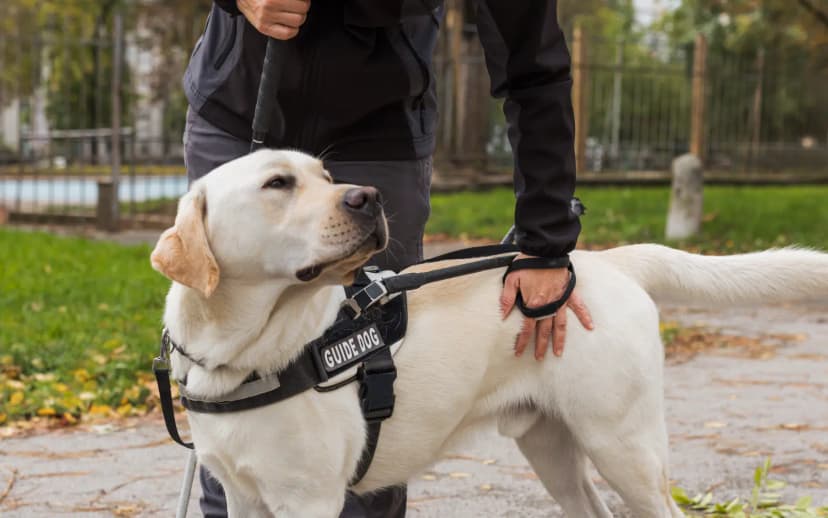
A service dog in public isn’t just a “well-behaved dog.” Public access readiness means your dog can:
- stay under control (leash manners, positioning, responsive to cues)
- remain non-disruptive (no repeated barking, lunging, whining, roaming, begging)
- stay housebroken and clean in public spaces
- work safely in tight spaces and around distractions
- recover quickly from normal surprises (noise, carts, people passing close)
It doesn’t require perfection. But it does require predictability. If your dog frequently struggles to settle, reacts to triggers, or needs constant correction to function, you’re likely practicing too hard too soon.
Mistake #1: Going public too early
This is the most common mistake—and it’s understandable. When PTSD symptoms are severe, it’s tempting to think, “If I can just take my dog with me, I’ll be okay.” But early public access done at the wrong stage can create lasting issues.
Signs you’re going out too early
- your dog can’t relax or settle, even briefly
- sniffing every surface and “vacuuming” the environment
- pulling, forging ahead, or weaving
- whining, pacing, or repeatedly breaking position
- staring at people/dogs, “locking on,” or scanning nonstop
- refusing food (often a stress sign)
What to do instead: the field-trip ladder
Public access is a ladder, not a leap:
- quiet outdoor spots (parking lot edge, calm sidewalks)
- low-traffic areas (off-hours)
- short indoor sessions (quick in-and-out training reps)
- gradually busier environments
Success is not “staying longer.” Success is leaving while calm.
Mistake #2: Confusing exposure with training
Taking your dog everywhere isn’t the same as teaching your dog how to behave everywhere. If your dog is overwhelmed and rehearsing stress behaviors, you’re training the wrong thing.
Why this backfires
Dogs learn from repetition. If an outing repeatedly results in:
- pulling + sniffing + scanning
- barking or whining
- stress pacing
- frantic focus on strangers
…those responses can become habits.
What to do instead: short, planned reps
Aim for “micro-outings” where your dog can succeed:
- 5–10 minutes, then leave
- reward calm choices (checking in, walking politely, settling)
- end early on a win
- repeat frequently in easy settings before leveling up
Mistake #3: Allowing strangers to pet or distract your dog
PTSD handlers often avoid conflict. Saying “no” can feel impossible—especially when you’re already anxious. But letting people interact with your dog during work teaches a powerful lesson: strangers are part of the job.
Why it matters
A dog who expects attention from the public will:
- break focus
- drift toward people
- struggle with neutrality
- become frustrated when attention is denied (whining, pulling)
What to do instead: scripts + positioning
Use short scripts that don’t invite debate:
- “Thanks—he’s working, no petting.”
- “Not today, thank you.”
- “We need space—thank you for understanding.”
Then use body positioning:
- step between your dog and the person
- turn your shoulder slightly away
- keep moving (movement ends conversations)
Mistake #4: Overusing a strict heel until the dog burns out
A constant heel can look “professional,” but it’s often unnecessary and can increase stress. Dogs need appropriate movement and decompression.
A better approach: switch between modes
Teach three distinct modes:
- “with me” (short heel for tight spaces)
- “let’s go” (structured loose leash)
- “break” (brief sniff decompression in appropriate areas)
This keeps your dog regulated and prevents frustration.
Mistake #5: Skipping the settle (the #1 PTSD-friendly public access skill)
For PTSD teams, the settle is everything. It’s how your dog stays calm when you’re waiting, stuck in line, or sitting in an appointment.
Common settle failures
- whining under tables
- creeping forward
- popping up repeatedly
- scanning, staring, or “watching” people
- begging behaviors
What to do instead: train settle like a real skill
Build it in steps:
- settle on a mat at home
- duration (seconds → minutes)
- mild distractions (door sounds, movement)
- calm public environments
- real scenarios (restaurants, clinics, airports)
A strong settle is often the difference between “public access survival” and “public access ease.”
Mistake #6: Reinforcing clinginess instead of cue-based support
PTSD makes closeness feel safe. Many handlers unconsciously reinforce clingy behaviors by petting and soothing their dog whenever they feel anxious.
The risk
Over time, dogs may become:
- “stuck” to the handler
- anxious when separated
- pushy for contact
- unable to settle independently
What to do instead
Teach cue-based contact:
- DPT on cue
- a chin rest on cue
- “place” or “mat” for calm independence
- a clean release cue (“off,” “all done,” “free”)
The goal is: support when asked, calm independence when not.
Mistake #7: Training “block” and “cover” in a way that looks like guarding
Space-creating tasks can help PTSD handlers feel safer—but only when done neutrally. If your dog looks suspicious or protective, you may face removals, conflict, and safety risks.
Red flags (guarding, not service work)
- stiff posture
- hard staring
- low growl, barking, “watching”
- tracking people closely
- escalating when approached
What to do instead: calm, cue-based positioning
- position → hold briefly → release
- reward calm stillness
- proof the dog’s neutrality (no staring, no tension)
- avoid reinforcing vigilance
Your dog should look like a calm working dog—not a security dog.
Mistake #8: Not managing sniffing and “vacuum mode”
Sniffing is normal. But uncontrolled sniffing in public can create access issues and safety concerns (food, hygiene, distractions).
What to do instead
Train:
- leave it (food and objects)
- default “head up” walking for short stretches
- reinforcement for ignoring dropped food
- structured decompression breaks in appropriate areas
Public access should not feel like a scavenger hunt.
Mistake #9: Missing your dog’s stress signals until they “explode”
PTSD symptoms can make it hard to notice subtle dog stress cues. But dogs show early signs before a bigger behavior happens.
Common stress signals
- lip licking, yawning, shaking off
- whale eye (white of eye showing)
- refusal of treats (in a food-motivated dog)
- pacing, inability to settle
- sniffing as displacement (stress sniffing)
- suddenly “sticky” or suddenly avoidant
What to do instead: exit early
Leaving early is not failure. It is smart training. It prevents rehearsing stress behavior and protects your dog’s confidence.
Mistake #10: Not having an exit plan
One of the hardest PTSD moments is feeling trapped—especially when you worry you’ll “look weird” leaving.
What to do instead: plan exits before you enter
- park where leaving is easy
- identify a quiet corner or outside spot
- keep outings short by design
- train “find exit” as a practical skill
- have a simple reset routine (water, sit in car, calm settle)
Your exit plan is your safety net. It keeps training calm.
Mistake #11: Using the wrong gear (or using gear to replace training)
Gear won’t make your dog legitimate—but it can affect control and comfort.
Common gear problems
- retractable leash (unsafe, uncontrolled distance)
- too-long leash in tight spaces
- uncomfortable harness that restricts movement
- gear that encourages pulling
- patches that invite confrontation
Simple public access best practices
- 4–6 foot leash
- comfortable harness or flat collar (dog-dependent)
- treat pouch for quick, clean reinforcement
- optional “in training” label if you’re still proofing
Mistake #12: Not proofing the “boring stuff”
Teams often fail on small real-life details, not big tasks.
The boring proofing checklist
- automatic doors
- shopping carts and strollers
- narrow aisles and tight turns
- people passing behind you
- food smells and dropped snacks
- long lines and waiting rooms
Proof these calmly in low-stress sessions, and your real outings get easier.
Mistake #13: Making every outing a training outing (no decompression)
If every walk and errand is intense, both you and your dog burn out.
What to do instead: separate “easy outings” from “training outings”
- training outings = short, planned reps, high reinforcement
- easy outings = calm environments where the dog can relax and succeed
- schedule recovery days after hard proofing sessions
A regulated dog performs better. A regulated handler trains better.
Mistake #14: Not practicing scripts (so you freeze when challenged)
PTSD can cause shutdown. Having words prepared reduces cognitive load.
Scripts you can rehearse
- “He’s working—no petting, thank you.”
- “He’s a service dog trained for disability-related tasks.”
- “We need a bit of space—thank you.”
- “I’m not required to show documentation.” (If relevant and safe to say.)
Practice these at home like you practice tasks. You’re training your nervous system too.
A simple public access progression plan (mini roadmap)
Level 1: calm foundations
- settle on mat at home
- loose leash in quiet areas
- “leave it” and “look” basics
Level 2: calm field trips
- parking lots, quiet sidewalks
- 5–10 minute sessions
- reward calm check-ins and settle
Level 3: real-life proofing
- mild crowds at off-hours
- short indoor reps (if appropriate)
- practice under-table settle
- build “find exit” and decompression routine
Level 4: busy environments (only when stable)
- increase distractions slowly
- keep sessions short
- leave before stress escalates
FAQs
Can a business ask for proof or paperwork?
Public access rules generally focus on behavior and task-trained work, not paperwork. Many handlers find it most effective to stay calm, answer only what’s required, and keep the outing moving.
What if my service dog has a bad day?
Bad days happen. The best response is to reduce difficulty, shorten outings, and protect confidence. Repeated stress rehearsals are what create long-term issues.
Can I train public access by taking my dog everywhere?
Not safely. Public access is a skill set. Structured training reps build calm and reliability far faster than “hope exposure.”
Conclusion: public access is a system, not a single test
Most public access struggles come from predictable mistakes: going out too soon, confusing exposure with training, skipping settle training, and not planning exits. When you fix those, your dog’s confidence grows—and your outings feel safer and calmer.
If you’re building a PTSD service dog team, aim for:
- short successful sessions
- neutrality over friendliness
- cue-based support, not clinginess
- calm exits as a win
- proofing one step at a time
That’s how public access becomes sustainable—for both you and your dog.