Nightmares, Night Terrors, and Sleep Support: PTSD Service Dog Tasks That Help at Night
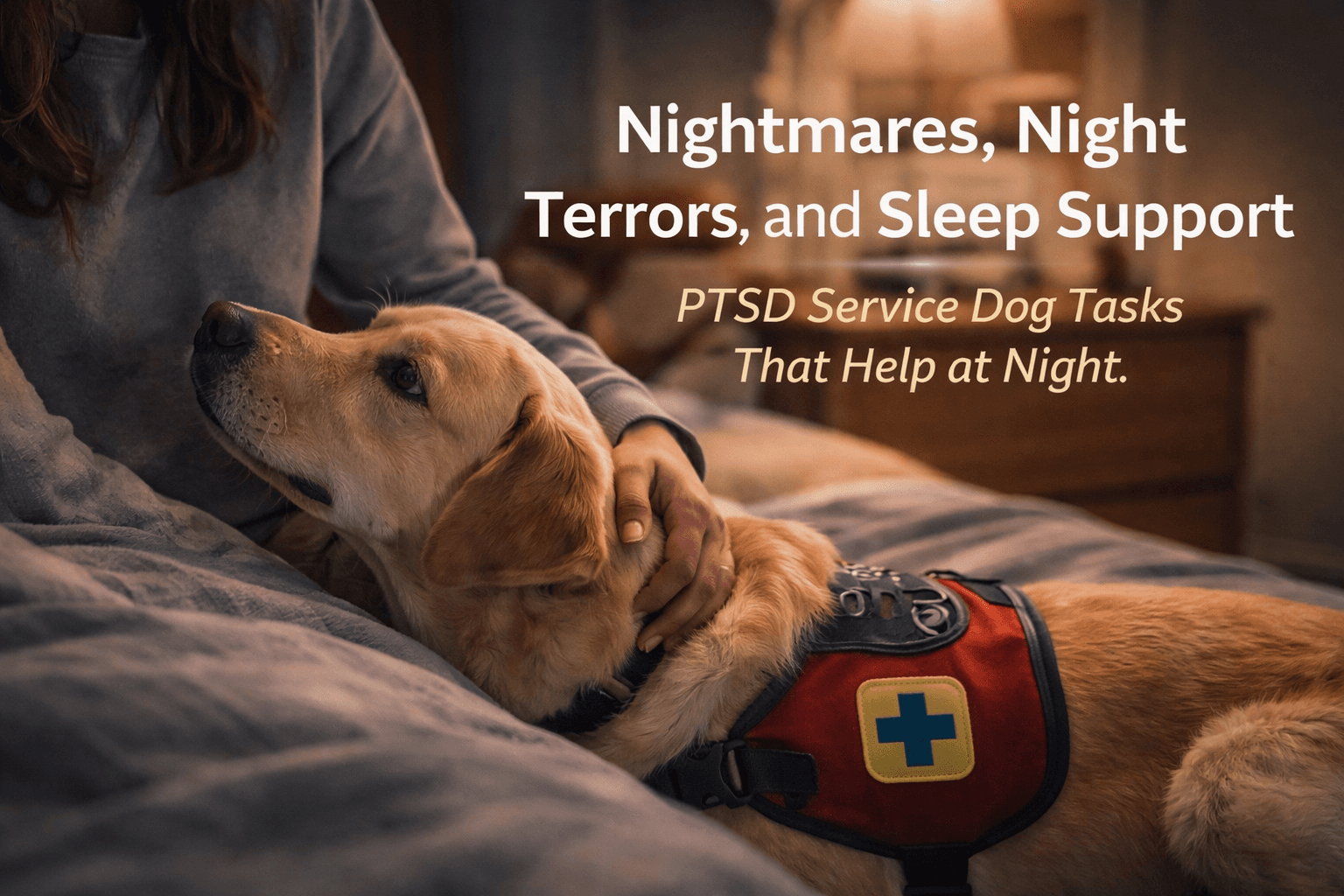
For many people living with PTSD, bedtime isn’t relaxing—it’s a transition into the most vulnerable part of the day. The house gets quiet, distractions fade, and the nervous system that’s been “holding it together” all day can suddenly feel louder. Some people dread falling asleep because nightmares are waiting. Others wake up in a rush of fear without knowing why. And when sleep becomes unpredictable, everything else—mood, focus, patience, resilience—gets harder.
A PTSD service dog can’t erase trauma or “stop” nightmares completely. But a task-trained psychiatric service dog can do something incredibly practical: help shorten the distance between terror and safety. Not through comfort alone—through trained, repeatable behaviors that support your body and brain while you’re half-awake and overwhelmed.
This guide explains the sleep challenges PTSD can create, the nighttime tasks that can help, and how to approach training in a way that feels realistic and safe.
Nightmares vs. night terrors vs. insomnia (in real-life terms)
People often use these terms interchangeably, but they can feel different in the body—so the support plan can look different too.
Nightmares are vivid, distressing dreams that may replay trauma themes. You usually wake up and remember at least part of what happened. The fear can stick around long after your eyes open, and going back to sleep can feel risky.
Night terrors can look like sudden panic during sleep—sitting up abruptly, yelling, thrashing, or appearing terrified. Some people don’t fully wake during a night terror, and they may have little or no memory of it the next day. (This is one reason nighttime service dog work needs to be trained carefully.)
Insomnia is the struggle to fall asleep or stay asleep, often because the body is stuck in high alert. Even if nothing “bad” happens at night, the nervous system may still treat bedtime like a threat.
What links all of these together is a simple reality: PTSD can keep the body in survival mode. Your brain may know you’re safe, but your nervous system doesn’t always get the memo.
What makes a nighttime behavior a real service dog task?
Under the ADA, a service dog must be trained to perform tasks that mitigate a disability. At night, that usually means tasks that help with:
- waking from nightmares in a controlled way
- grounding and reorientation after waking
- reducing panic escalation so you can recover faster
- guiding you safely when you’re disoriented
- supporting a calm return-to-sleep routine
A dog sleeping near you may be comforting—and that’s valuable—but task work is about trained action you can rely on when you’re not thinking clearly.
A simple “nighttime task stack” that works in real life
Most people don’t need ten complicated tasks. They need a calm plan that repeats night after night, so the body begins to expect: I can get through this.
A helpful framework is:
Detect → Interrupt → Ground → Reset → Return to Sleep
Some handlers use the full stack. Others only need two layers. What matters is that it fits your symptoms and keeps the dog calm, safe, and consistent.

The nighttime tasks that help most (and why)
1) Nightmare interruption (gentle wake-up)
For many handlers, the most valuable nighttime task is a trained “wake-up” behavior. This can look like a nose nudge, a gentle lick, or a soft paw touch—something that brings you out of the nightmare without jolting your nervous system even harder.
The difference between a helpful wake-up and a stressful one is how calm and predictable it is. The goal isn’t to startle you awake. The goal is to help you wake enough to realize: I’m here, it’s now, and I’m safe.
A well-trained dog doesn’t escalate. It doesn’t bark or jump. It simply persists gently until you’re responsive.
2) Grounding after waking (reorientation)
Waking from a nightmare can feel like waking into danger. Your eyes are open, but your body still believes you’re trapped in what happened. That’s where grounding tasks can help.
A dog can be trained to offer:
- a chin rest (steady weight and contact)
- a calm lean against your legs
- or deep pressure therapy (DPT), if it’s safe and appropriate for you
These tasks help pull your attention into the present. They give your nervous system something concrete: warmth, weight, contact, rhythm. It’s not about “fixing” fear—it’s about giving your body a bridge back to reality.
3) Light activation (advanced)
Some handlers recover faster if the room is lit. A light can break the “fog” and reduce confusion. Dogs can be trained to nose-target a lamp switch or a button light.
This is considered an advanced task because it requires:
- careful setup (safe switch, no cords or hazards)
- consistent targeting
- and calm execution during a stressful moment
It’s optional—but for some people, it’s a surprisingly powerful reset.
4) “Check” cue (structured, limited room check)
Some PTSD handlers feel safer after briefly confirming the room is okay. A dog can be trained on a cue like “check” to look toward a doorway or scan a room boundary.
The key here is structure and limits. You want this task to reduce anxiety—not reinforce fear. Many handlers do best when “check” is a quick ritual:
- cue “check”
- dog looks/returns
- you mark and reward
- then you move into the return-to-sleep routine
If the dog begins scanning constantly or acting like it’s “on guard,” that’s a sign to adjust training and bring in professional support. Service dogs should not become anxious night watchmen.
5) Guide-to-safety (bathroom, lighted space, back to bed)
After waking, some people freeze, dissociate, or feel disoriented. Guiding tasks can help you move without overthinking.
Examples include:
- “find door” (bathroom or hallway)
- “find bed” (returning calmly)
- “find seat” (if you need to sit and breathe)
This kind of task is less about the destination and more about restoring momentum and orientation.
6) Recovery supports (water, phone, medication pouch)
After an episode, your body might shake, your mouth may be dry, or you might need something practical without rummaging around in the dark.
Dogs can be trained to retrieve:
- a water bottle
- a phone
- a pouch you keep stocked (for example, grounding items)
If medication is part of your plan, the dog can retrieve a pouch—but medication decisions should remain human-controlled.
7) Alerting a partner/caregiver (advanced + plan-based)
This should only be trained when you have a clear, safe plan in place. The dog can be taught to go to a partner and perform a specific alert behavior.
This is not necessary for most handlers—but for some people, it adds safety. The caution is that it must be trained carefully to avoid anxious false alarms.
How to train night tasks safely (the part most people skip)
Night training isn’t “harder” because dogs are less smart at night. It’s harder because humans are disoriented, and startle responses are real.
So the safest approach is: train the behavior in daylight first, then move it into bedtime gradually.
Start by training the exact behavior you want
If you want a nudge wake-up:
- teach “nudge” on cue
- teach gentle persistence
- teach a “settle” immediately after
This matters because you want the dog to learn: “I wake you, then I become calm again.”
Then practice “fake nights” without real distress
You can rehearse:
- lying in bed with eyes closed
- giving the cue “help”
- rewarding the calm wake-up behavior
- then cueing settle
This builds a predictable pattern without flooding you or the dog.
Only then let the dog respond in real moments
If you’re working with true night terrors, complex dissociation, or intense startle responses, it’s worth involving an experienced trainer. Your dog’s safety matters too, and training should not put either of you at risk.
Building a calming sleep routine with your service dog
A dog’s task work is only one part of the sleep puzzle. Many handlers do best when the dog becomes part of a consistent, soothing ritual.
A simple routine might include:
- last potty break and decompression walk
- dim lights + white noise
- “settle” cue for the dog in a consistent spot
- a short breathing routine for you
- lights out
After a nightmare, the recovery script matters too. Something like:
- sit up
- cue chin rest/DPT
- sip water
- cue settle
- return to sleep
When the routine repeats, the brain learns: there’s a way back.
When nighttime tasks may not be appropriate
Not every dog—or every handler situation—is a good fit for night task work right away.
You should pause and reassess if:
- the handler has intense startle reactions that could endanger the dog
- the dog becomes restless, anxious, or protective at night
- the dog begins scanning/guarding constantly
- the dog’s sleep quality is declining (they need real rest to work well)
A stable service dog is calm. If the dog is anxious, it’s a sign the plan needs adjusting.
FAQs
Can a PTSD service dog wake someone from nightmares?
Yes—nightmare interruption is a common PTSD service dog task when trained gently and safely.
Are night terrors harder to support than nightmares?
Often, yes. Night terrors can involve confusion and movement. Training should be safety-first and may require professional guidance.
Does my service dog have to sleep in my bed?
No. Many dogs work perfectly from a floor bed next to the handler. What matters is access and consistency.
How do I stop my dog from becoming anxious at night?
Keep nighttime tasks structured, calm, and limited. Reward “return to settle.” Avoid turning the dog into a night watch.